
RUTHIN
BALA

LLANDEGLA MOORS
-
Clay pigeon shooting with coaching and tuition for all abilities, a fly fishing trout lake set in the beautiful Clwydian hills: www.fauxdegla.co.uk
-
Llandegla Fishery offers some of the best quality fishing in Wales. www.
llandeglatroutandcoarsefishery .com -
At Llandegla Forest there is a visitor centre with bike trails and walks, providing a range of four routes suitable for cyclists of all abilities and fitness levels from a gentle family route to the highly demanding black route. www.coedllandegla.com


Visit Ludlow
Ludlow is a vibrant market town, with good food, independent shops and historic streets that are easy to explore on foot, plus small galleries and plenty of spots for coffee or lunch. If you fancy a bit of history, Ludlow Castle is a big part of the town’s character.

Visit Attingham Park Stately Home in nearby Shropshire
An 18th-century estate for all seasons with 200 acres of parkland and Regency Mansion.

Take A Canal Boat Trip Over The Pontcysyllte Aqeduct
There are 5 companies, based within the 11 mile World Heritage Site, which offer boat trips or hire canal boats for you to travel along the canal and across Pontcysyllte Aqueduct.

Take A Vintage Train Ride From Llangollen To Corwen (and back)
Llangollen Railway is a Heritage Railway Line running between Llangollen, following the River Dee through the Dee Valley for 10 miles, to the town of Corwen. There are four, soon to be five, stations along the line all with their own special charm and hidden gems. Each station has local walks that all have stunning scenery.

Castell Dinas Brân
Castell Dinas Brân is a medieval castle occupying a prominent hilltop site above the town of Llangollen again about twenty minutes drive from The Mulberry Inn. The presently visible castle was probably built in the 1260s by Gruffydd Maelor II, a Welsh prince. Dinas Brân has been variously translated as the “crow’s fortress” or “fortress of Brân”, with Brân as the name of an individual or of a nearby stream. An English name, “Crow Castle”, has also been used since at least the 18th century.

Valle Crucis Abbey
A visit to this fascinating site on the outskirts of Llangollen evokes the lives of the Cistercian monks. The monks loved all things austere. Solitude ruled absolute. Finding this remote yet magical location must have at least raised a smile or two amongst the serious-minded brethren. Building work got underway in 1201. Seven centuries later and the abbey is one of the best preserved in Wales. Even the monks’ fishpond is still full of water! From its cloister to chapter house, with striking rib-vaulted roof, this abbey was shaped by the devout nature of its inhabitants.
The abbey was also remarkably self-sufficient thanks to the lay brethren. They were happy to leave the choir monks to their prayers while they got on with the job of tending the land. All friends together? Not quite. The monks observed their daily offices in the choir, separated by a screen from the lay brethren who worshipped in the nave of the abbey church. Far from an easy life, Valle Crucis Abbey suffered a serious fire and numerous attacks but went on to earn a reputation for its appreciation of the literary arts. In 1535 it was ranked the second richest Cistercian monastery after Tintern. By this time, the Cistercians had relaxed their orthodox austerity. A comfortable heated suite was created for the abbot. This new found wealth and hospitality didn’t last long. Valle Crucis was duly dissolved by royal decree in 1537.

Bodnant Gardens
A few miles outside of Conwy discover one of the finest rose gardens in Wales. Originally created in the early 1900s, the two rose terraces were restored in recent years.
Over 1,500 plants now fill the terrace beds, including many of David Austin’s fragrant English roses, while hundreds more climbing roses smother garden walls and pergolas in fragrant blooms during summer.
Take a walk along the terrace in mid-summer to be surrounded by their soft colour and fragrance. You’ll also find dramatic views of the Carneddau mountains.

Plas Newydd & The Ladies of Llangollen
Plas Newydd, Llangollen is a stone built house converted into a gothic ‘fantasy’ by its most famous inhabitants – ‘The Ladies of Llangollen’. The ladies ran away from the life they were expected to live in Ireland in 1778 to set up a new life and home in Wales.
The house has been welcoming visitors since the arrival of Lady Eleanor Butler and Miss Sarah Ponsonby in 1780 who lived there for the next 50 years. Indeed their notable visitors included The Duke of Wellington, Wordsworth, Shelley, Sir Walter Scott and Josiah Wedgewood.
Today, as in those times visitors are enchanted by the by the beautiful gardens and remarkable house with trip advisor reviews quoting ‘Unique and Well Worth a visit’, ‘A Gem of a Picturesque’ and ‘Unmissable’.
Visitors can explore the remarkable oak carving panelled interior, these carvings are a source of constant fascination to visitors, many carvings older than the house having come from churches that were remodelled in the 18th and 19th century. The ladies dressing room is now an exhibition room that tells the ladies tale. There is also a library, dining room and servants quarters (the attic room!)
Visitors can be seen enjoying walks in around ten acres of grounds ranging from formal ‘parterre’ and rose gardens to beautiful woodland and dell areas where the ‘Cyflymen’ (fast flowing one) stream is to be found, all this set against the backdrop of the beautiful Welsh hills in this Area of Outstanding Natural Beauty.

Chirk Castle
Enjoy a day exploring the National Trust site of Chirk Castle that was built in 1295. As well as visiting the Dungeons and exploring the Adams Tower, you can take a pleasant stroll around the 5.5 acres of beautiful gardens. There are also lots of different Trails to walk amongst the 480 acres of parkland within the Chirk Castle Estate. Refreshments available at the Tea rooms. This day out is one not to be missed. Visit Site

Erddig Hall near Wrexham
Unique ‘upstairs downstairs’ property, most interesting are the kitchens, laundry, bake house, stables, sawmill & smithy used by the servants. The stunning staterooms display most of their original 18th & 19th century furniture. The large walled garden has been restored to its 18th century formal design. Visit Site

Nesscliffe Hill & Kynaston’s Cave
Nesscliffe hill is a sandstone escarpment & is now a country park with various footpaths through the woods. To the north of the hill the ramparts of an old hill fort are present. An old sandstone quarry face forms a spectacular cliff, popular for rock climbing. Cut into the cliff face is a cave reputedly the hideaway of the highwayman Humphrey Kynaston & his horse. Visit Site

Shrewsbury
Set amidst glorious countryside near to the Welsh Borders, it is one of England’s finest medieval market towns. But stuck in the past it is not!
The town centre is packed with timber-framed black & white buildings, steep narrow streets and alleyways. In fact it boasts over 600 listed buildings including the Castle, now a regimental museum and the world-famous Shrewsbury Abbey, home of the fictional Brother Cadfael. Charles Darwin was born and educated in Shrewsbury and all around you will find reminders of his association with the town. The River Severn forms a loop around the town centre offering gentle riverside walks or you can enjoy a trip on the new pleasure boat Sabrina. Next to the river you can relax in the beautiful Quarry Park., location for the annual Shrewsbury Flower Show. International Award Winning Town of Flowers. Continuing on the floral theme, due to the proliferation of plants and blooms, particularly in the summer months, Shrewsbury is often referred to as the “Town of Flowers”. Visit Site

World Heritage site – Pontcysyllte Aqueduct
The Unesco World Heritage Site takes in not only Pontcysyllte Aqueduct – Thomas Telford’s stream in the sky – but also eleven miles of canals and the Dee Valley. Dare you cross it? And can you do it without looking down? You can walk across Pontcysyllte Aqueduct, or save your legs and take a leisurely boat ride with Jones the Boats. But there’s one thing you have to take with you. A camera. The views are something else. Pop into the visitor centre too, to take in some information about the history of the aqueduct. Chirk Aqueduct and Viaduct are almost as impressive too – walk along the Llangollen canal and you might see a train crossing above you. Go on a little further and take a walk through the tunnel, it is 421 metres long and you might be sharing with a narrowboat which will light the way. Visit Site

Old Oswestry Hill Fort
Old Oswestry Hill Fort – this spectacular, dramatic & mysterious 3,000-year-old hill fort marks the beginning of one of Britain’s oldest settlements, Oswestry. Old Oswestry was built and occupied during the Iron Age (800 BC to AD 43) and is one of the best-preserved hill forts in Britain. It is on the outskirts of town and a short climb will reward you with views of both the town and the county of Shropshire, especially impressive when the spring bluebells are out. Visit Site

The Follies
The Follies is an historic woodland fantasy with cliffs, crags, caves, deep woods and a series of extraordinary monuments built over 200 years ago. After years of neglect the magical landscape was lovingly restored and reopened in 1993. Parts of the park and the main walking routes contains several flights of steps, some natural ones carved into rock and some man made wooden ones – these can be slippery when wet. Visit Site

Chester
Its bewitching beauty and unique atmosphere make Chester one of Britain’s most popular places for an unforgettable short break. The ancient city is a truly breathtaking experience. Each chapter of Chester’s history is etched into the very fabric of the city. Well, you are walking where Roman Legionaires marched to war, Viking raiders wreaked havoc and Norman invaders conquered Anglo Saxons. Chester has the most complete city walls, the oldest racecourse and the largest Roman Amphitheatre in Britain, plus a 1000 year old Cathedral with Europe’s finest example of medieval carvings – and of course the one and only 700 year old Rows galleries where shopping is a double delight.

Pistyll Rheadr Waterfall, Llanrhaeadr-ym-Mochnant
You can drive further along this beautiful Ceiriog Valley to see Wales’ highest waterfall, an enchanting natural temple nestling in the Berwyn Mountains in Wales.

Lake Vrynwy
This is the part of the Ceiriog Valley where a new village was constructed in the 1880’s and the old village flooded to create Lake Vyrnwy reservoir to supply Liverpool with fresh water by creating the most magnificent dam. On foot you should be able to hear pied flycatchers and redstarts, see dippers nesting by the rocky streams and goosanders bobbing on the water – look up and maybe you’ll spot a peregrine hunting. It’s also worth simply driving around just to take in the stunning scenery and the road beyond leads to lake Bala too.

Bala and it’s lake
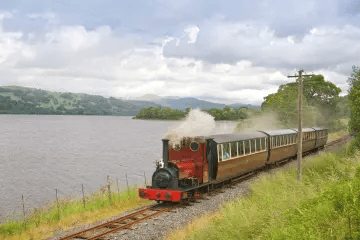
The picturesque small market town of Bala is a great day out. It features a magnificent lake (also known as Llyn Tegid) which offers sailing opportunities and also a miniature railway along it’s shore. Again there is an abundance of stunning local scenery.

Llangollen Wharf Horse-drawn Boat Trips
Close to The Mulberry Inn, visitors to the area have been enjoying leisurely trips from Llangollen Wharf
for over a hundred years along the UNESCO World Heritage Site Canal, home to a rich variety of flora and fauna.
Trips vary from forty-five minutes to a couple of hours and sometimes extend as far as the Horseshoe Falls,

Powis Castle
Just one hour by car. With an amazing collection of paintings, furnishings and tapestries and the “Clive” museum
with over three hundred items from India and the Far East. The gardens with Italianate terraces,
spectacular Yew hedges, lead statues and lavish herbaceous borders never fail to impress.

Llangollen Steam Railway
Llangollen Railway is a Heritage Railway Line running between Llangollen, following the River Dee through the Dee Valley for 10 miles, to the town of Corwen. There are four, soon to be five, stations along the line all with their own special charm and hidden gems. Each station has local walks that all have stunning scenery.
The line, located within an Area of Outstanding Natural Beauty (AONB), remains close to the waters of the river for most of its length, on the north bank at Llangollen Station, the river is crossed on to the south bank via the Dee Bridge, approximately one mile upstream from Llangollen. The Dee is classed as a Site of Special Scientific Interest (SSSI) for its entire length.
Llangollen Railway was started in 1975 by a group of enthusiasts who saw the potential for a scenic heritage line through the Dee Valley. Their original vision grew into what you can see today.

Betws y Coed
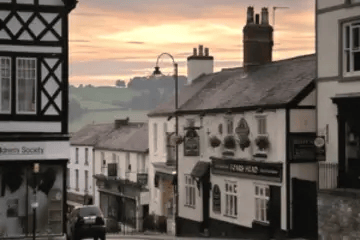
Experience the lure of Snowdonia with a visit to the bustling mountain village of Betws-y-Coed – a lovely hour’s drive from The Mulberry Inn. This all-season resort, nestled at the heart of the Conwy Valley where 4 rivers converge, is a hive of activity. Surrounded by some of Wales’ most spectacular countryside, Betws-y-Coed attracts visitors from all over the world, year in, year out.

Conwy
Conwy is a town rich in history, which much of it still preserved within the walls and traditional structures of its buildings. In the heart of it is the mighty 13th-century castle, whose walls encapsulate this remarkable medieval town. It’s about an hour and a half’s drive from The Mulberry Inn – beyond Betws y Coed and towards Llandudno.

Llandudno
A beautiful Victorian seaside resort – well worth a day out. Llandudno is a coastal town in north Wales. It’s known for North Shore Beach and 19th-century Llandudno Pier, with shops and a games arcade. Northwest of town, the cliffs of Great Orme headland jut into the sea. A 1902 tramway has an upper and lower section, and travels to the headland’s summit. To the east, smaller headland Little Orme is a nature reserve.

Chirk Aqueduct and Tunnel
Visit Chirk Aqueduct and you can have one foot in England and one foot in Wales. Just ten minutes drive from The Mulberry Inn and a few minutes’ walk from Chirk town centre, it straddles the border between Wales and England and sits companionably next to Chirk viaduct which has the railway line too. As you arrive, looking down at Chirk basin and the aqueduct from the road above is a sight to behold.
The aqueduct, designed by William Jessop and Thomas Telford, was built between 1796 and 1801. It had an innovative design: the weight was minimised by the ten semi-circular masonry arches being hollow and by the water channel having an iron bed plate and brick sides sealed using hydraulic mortar.
Behind you and just along the towpath, Chirk tunnel, known locally as ‘the Darkie’ was one of the first in the UK to have a towpath. If you’re feeling brave, take a stroll through it – but it’s recommended you use a torch.

Ellesmere, Shropshire
Over the centuries Ellesmere has developed into a vibrant market town with numerous Georgian and half-timbered buildings surrounding the medieval streets. Ellesmere’s shops are many and varied including antiques, crafts and gifts. The weekly market still runs since it was granted its charter in 1221 by Henry the third and occasional antique fairs and craft sales complement the retail scene.
There are formal gardens and woodland walks with art and sculpture trails to take in and there’s the motte and bailey of the castle grounds – a good place for a picnic. The wildlife and Heron Watch has always been synonymous with Ellesmere and you can get back to nature from the comfort of the indoor viewing area.
This pretty little market town in the heart of the Shropshire countryside was actually the catalyst for one of the greatest canal networks in the country and subsequent feats of breath-taking engineering that challenged the great Thomas Telford. Ideal for a day out and only thirty minutes from The Mulberry Inn.

Oswestry
Discover Oswestry, a historic Shropshire market town almost surrounded by Wales. Oswestry is famous for its award-winning markets, vintage railway, independent shops, welcoming cafés, local distillery and vibrant festivals all flavoured by its unique blend of English and Welsh heritage.

All Saints Church, Gresford
Sometimes described as the ‘perfect Cheshire church in Wales’ the present 15th century All Saints has developed from earlier, smaller church buildings on the site and is believed to have been a site of pilgrimage, either to ‘All Hallows’ or possibly to St Apollonia, the patron saint of dentists.
There are Roman relics in the church from the days when the nearby area had a Roman settlement; also to be seen are very fine misericords and carvings, and a wealth of medieval stained glass. Some of the carvings depict people apparently with toothache, and four images of St Apollonia feature in the old stained glass.
https://www.nationalchurchestrust.org/church/all-saints-gresford

More
Visit Valle Crucis Abbey
https://cadw.gov.wales/visit/places-to-visit/valle-crucis-abbey
Visit Chester Chesire & Beyond
https://www.visitcheshire.com
Things to do in Llangollen
visit www.llangollen.org.uk

 |
 |
 |
 |
 |
 |
 |
 |
 |
 |
BOOK DIRECT ON 01691 718281

